We live in a world of constant optimization. We track our sleep, schedule our downtime, and treat our personal time off like another item on a high-pressure checklist. But when we cast off the lines of the M/V Pacific Yellowfin and head north toward British Columbia’s wild coast, those rigid schedules melt away.
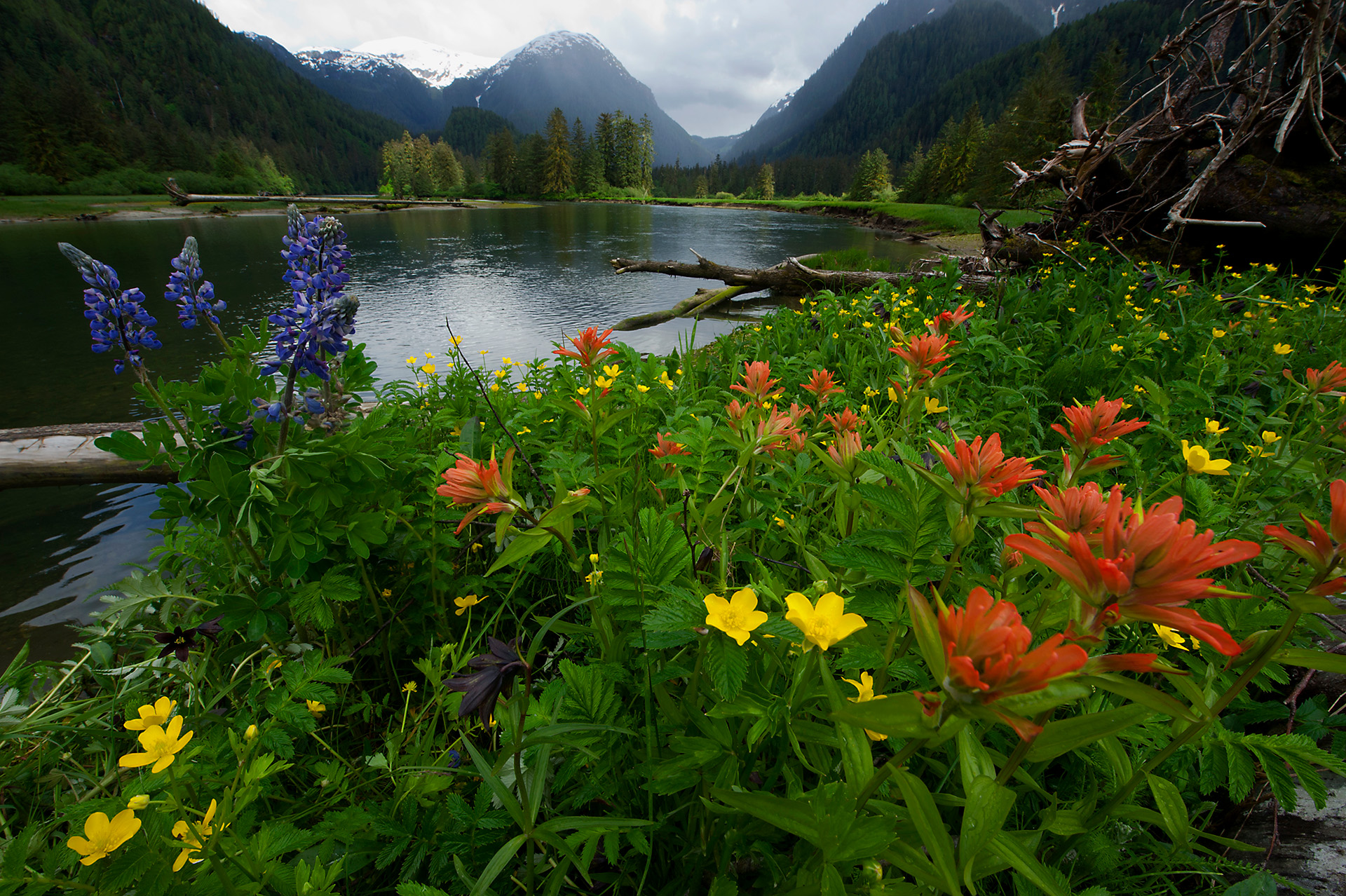
In the Great Bear Rainforest, you don’t just look at scenery; you step into an intimate, 10,000-year-old conversation. This living, breathing ecosystem dissolves the borders between land and sea. From here, the journey becomes a rare sensory experience that asks us to trade our timelines for patience and let the wild take the lead.
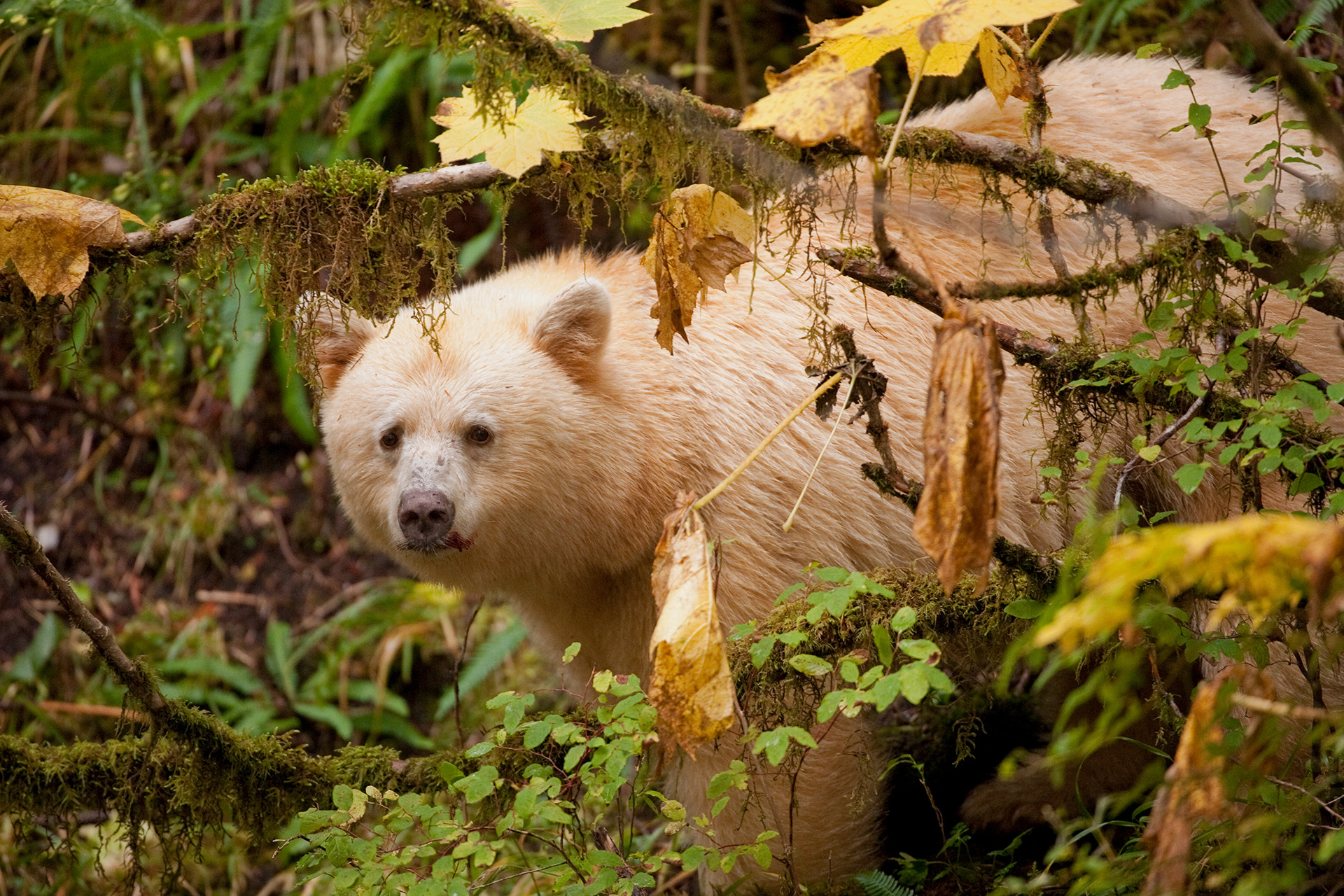
Photo by Ian McAllister
The Ghost in the Green
A specific quiet settles over you when you’re sitting on a mossy riverbank, waiting. Here, wilderness can’t be scripted; true luxury is having the time to let nature unfold on its own terms.
Most guests come hoping to glimpse the elusive Spirit Bear (Kermode bear), a beautiful evolutionary miracle. This black bear subspecies carries a rare recessive gene that produces a striking white coat. Remarkably, this brilliant ecological quirk makes the Kermode bear nearly invisible to fish from underwater during the day, offering a huge advantage when tracking salmon.
Tracking bears under the direct guidance and cultural protocols of the Gitga’at First Nations changes the entire experience. Alongside these traditional land guardians, you learn to read the river through generations of ancestral knowledge, turning a wildlife sighting into a profound cultural connection.
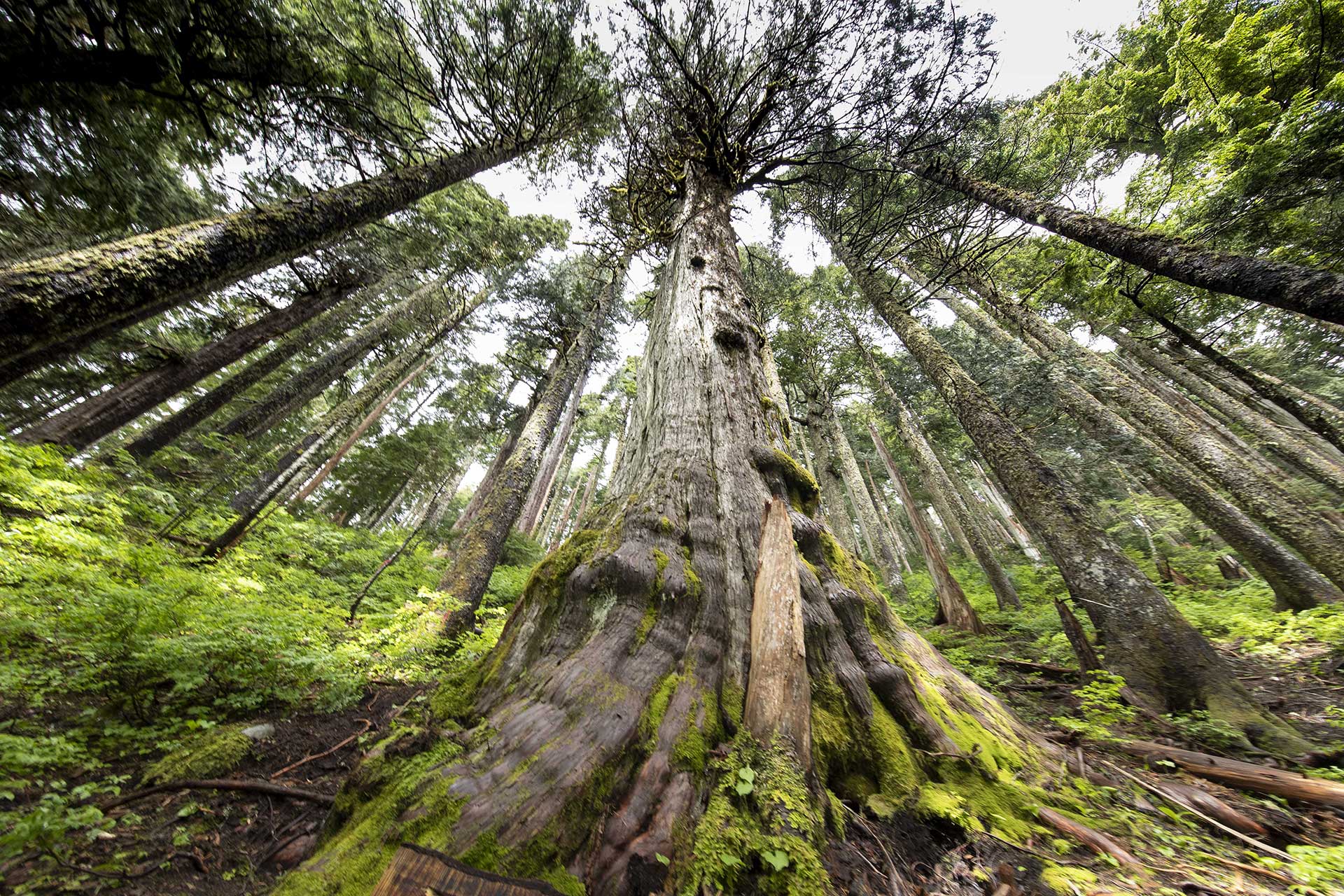
Photo by Ian McAllister
The Salmon Forest
We love watching the realization hit our guests that this forest is literally built of fish.
Every autumn, thousands of spawning salmon pump deep-ocean nutrients into the terrestrial landscape. As grizzly bears, sea wolves, and eagles carry their catches into the old-growth interior, decaying fish release vital marine isotopes into the soil. Through this profound ecological loop, the giant Western Red Cedars and Sitka Spruces are physically constructed from the sea.
To witness this delicate exchange, the Pacific Yellowfin’s shallow draft, tenders, and kayaks slip silently into narrow river mouths unreachable by larger ships. Gliding into these pristine estuaries undetected ensures a completely undisturbed view of nature.
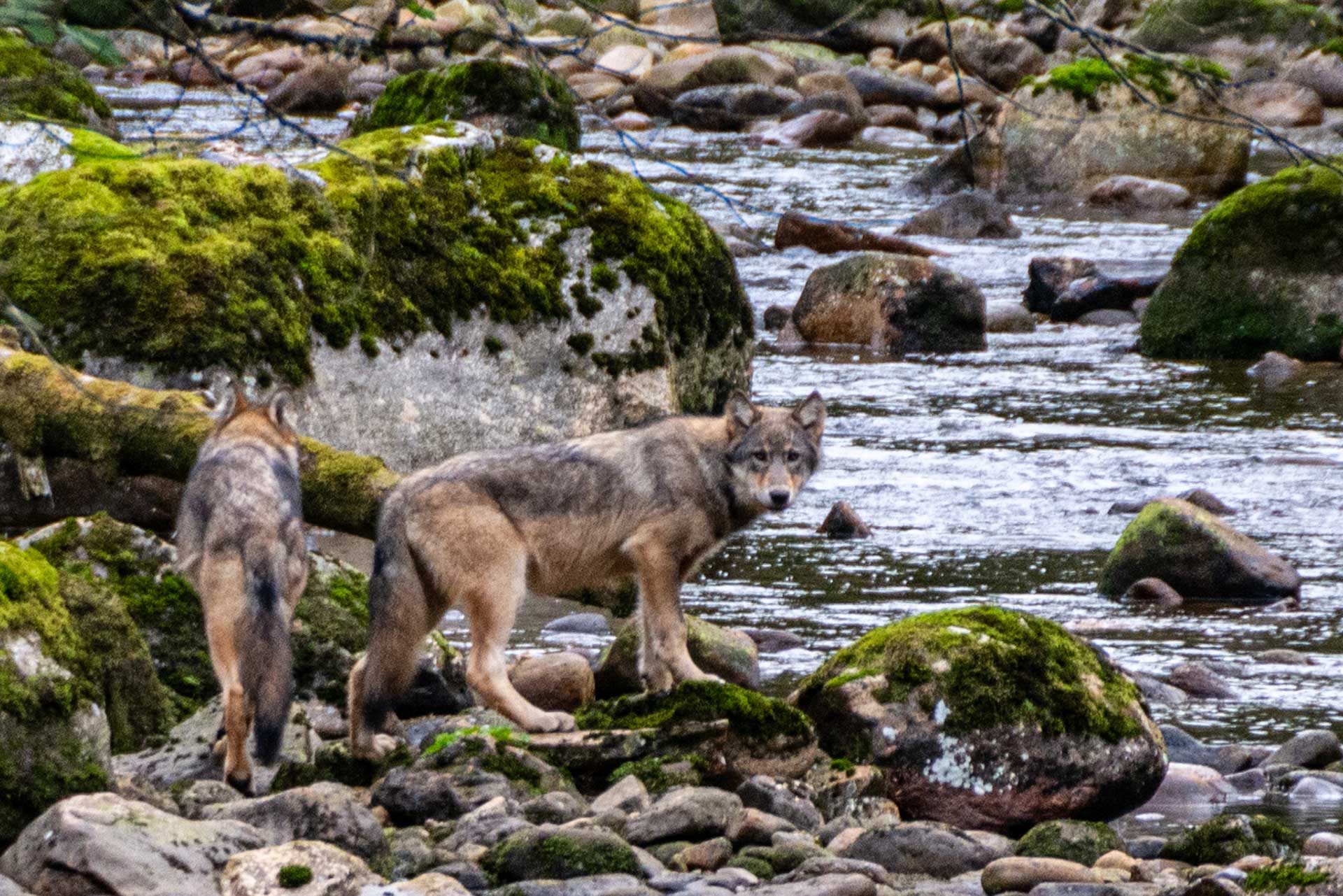
Photo by Norm Hann
Where Wolves Swim and Whales Sing
Out here, the boundaries we draw on maps vanish into a world where wolves are sailors and whales are neighbours.
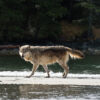
Coastal sea wolves swim miles between island archipelagos to hunt marine life, while local bears forage for crabs and mussels right in the intertidal crossroads. Because these incredible behaviours can happen right at the water’s edge, our nimble tenders and kayaks bring you to a respectful distance without disturbing this delicate world.
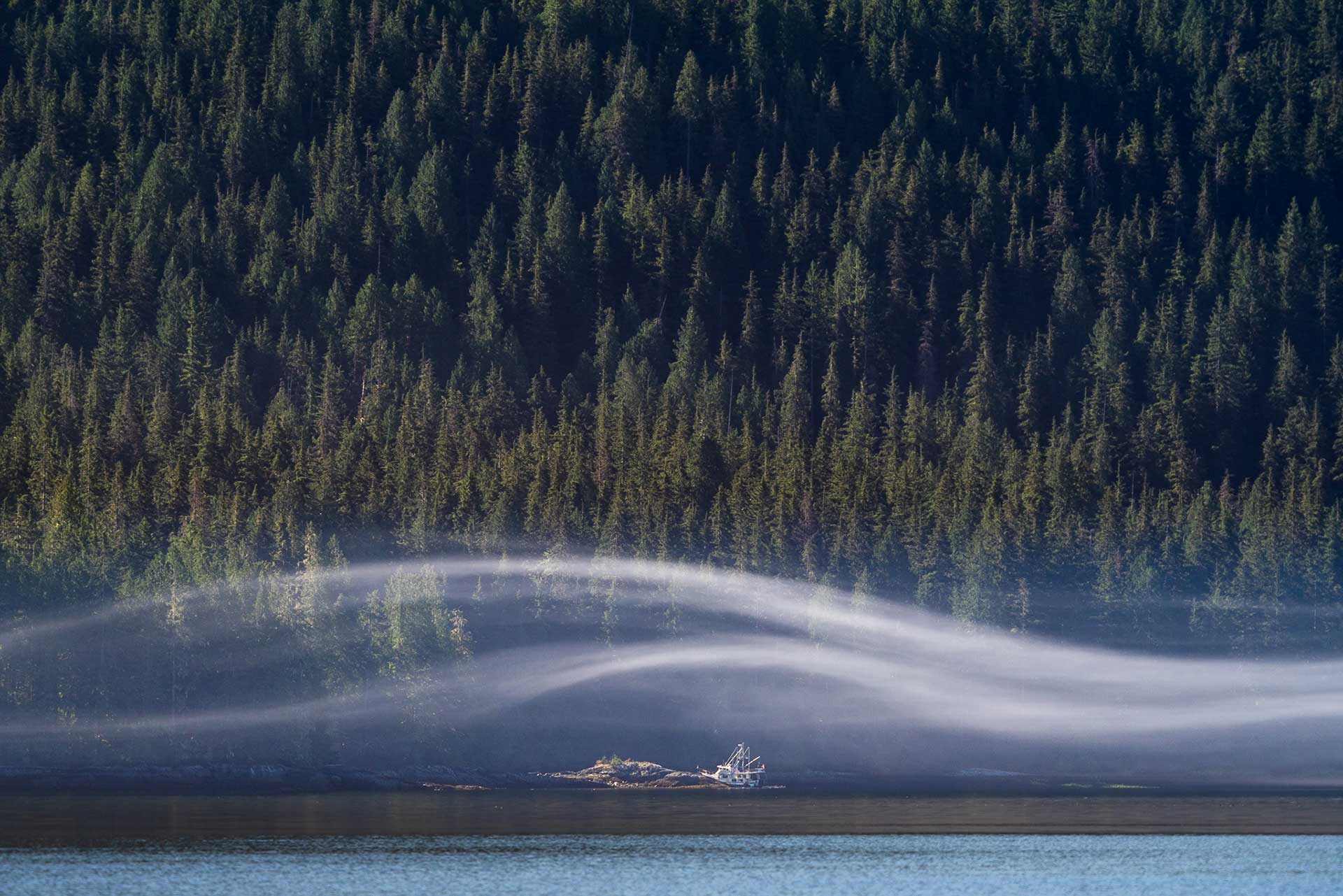
Photo by Kali Wexler
Breathing Inside the Carbon Cathedral
Stepping out onto the wooden decks of the Pacific Yellowfin in the early morning mist brings a profound sensory shift. The air sounds and tastes different.
The Great Bear Rainforest acts as a global lung, storing an estimated 1.8 billion tons of carbon, holding more per hectare than many tropical rainforests. This immense carbon capture relies on a beautiful partnership between the old-growth canopy and the towering kelp jungles below. These underwater forests of bull and giant kelp stabilize the coast, calm currents, and produce vital oxygen.
There is something deeply restorative about absorbing the clean ocean mist, listening to a whale’s blow echo through a quiet channel, and letting your nervous system completely reset.
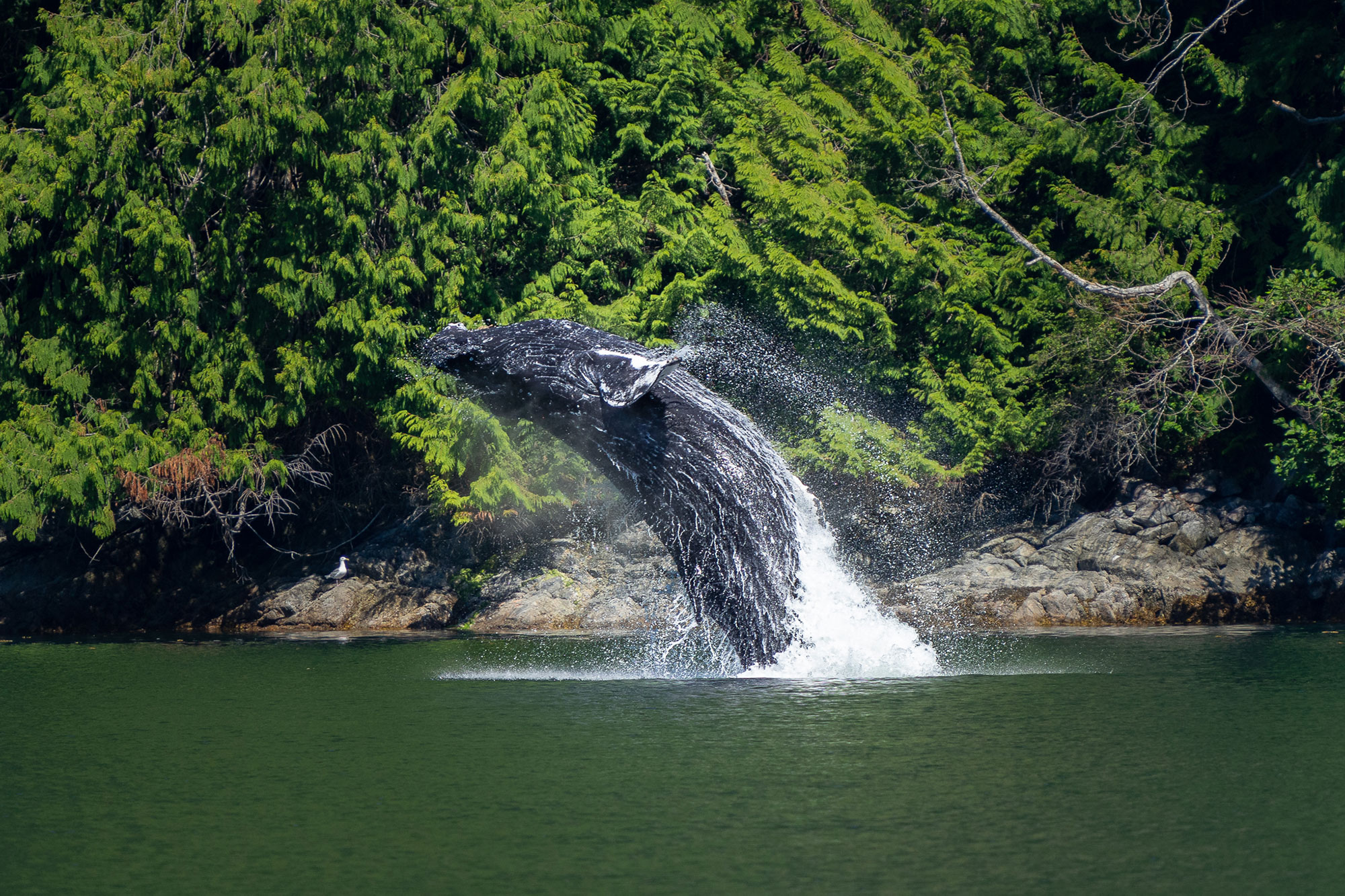
Photo by Kali Wexler
Meeting the Coastal Stewards
Mindful travel means remembering that we are guests in an ancient home. The Great Bear Rainforest remains intact for one reason: thousands of years of continuous stewardship by First Nations, including the Heiltsuk, Kitasoo/Xai’xais, and Gitga’at Nations. Welcomed by Captain Colin’s 20 years of established trust in the region, we enter these unceded territories with humility and gratitude.
Our journeys connect you directly with frontline researchers at Whale Point Lab on Gil Island, BC’s only year-round, non-invasive whale observation facility. In this base camp, Gitga’at wisdom pairs with Western science to protect regional whale populations.
As the largest intact temperate rainforest left on Earth, 85% of this magnificent 6.4-million-hectare wilderness is legally protected. Navigating this timeless space aboard the historic M/V Pacific Yellowfin aligns you perfectly with the rhythm of the wild. Guided by the tides, not a timeline, we adapt to the environment, proving that the most transformative moments are always the ones you never saw coming.